pryanicom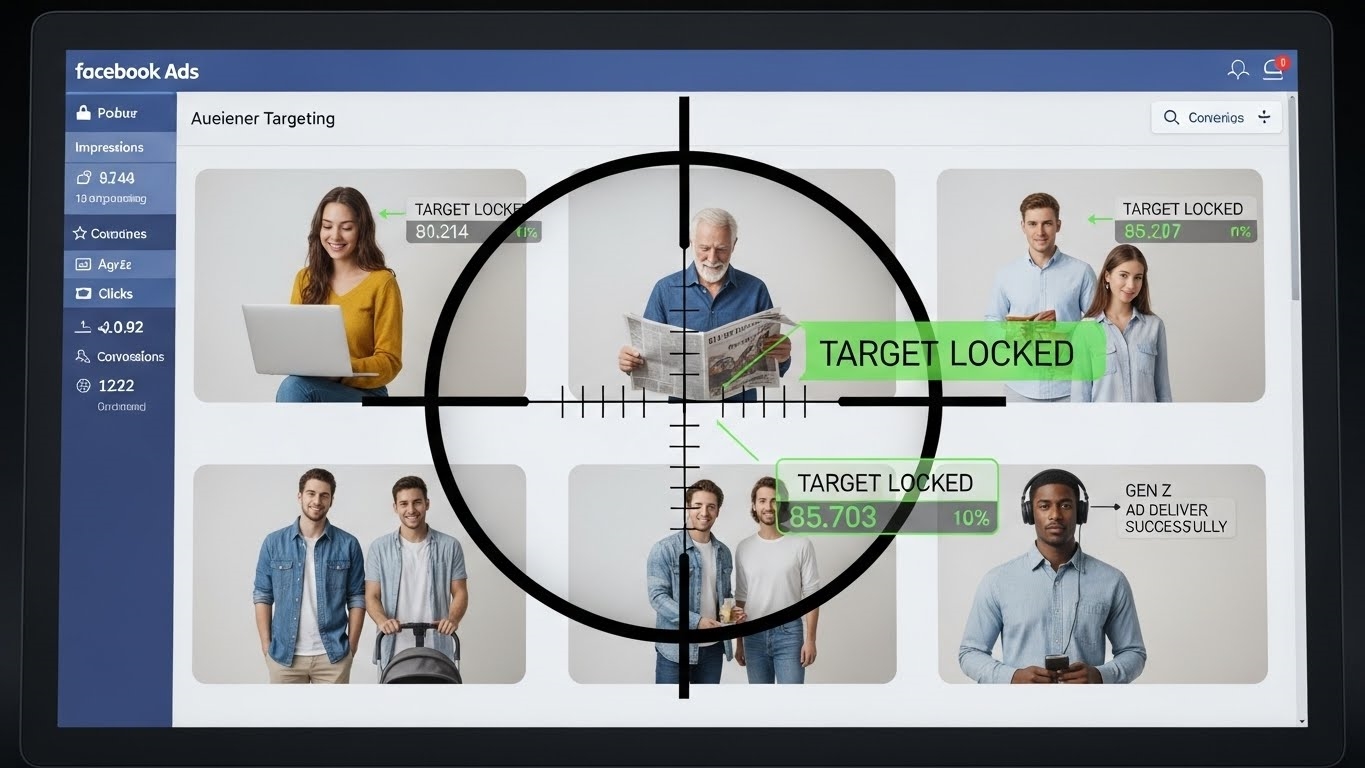
What if every marketing dollar you deployed didn’t just reach an audience, but resonated with individuals genuinely primed for your message? The era of broadcasting to the masses, hoping for a flicker of interest, is a relic of a less sophisticated past. Now, success hinges on precision, on understanding not just who your audience is, but what drives them.
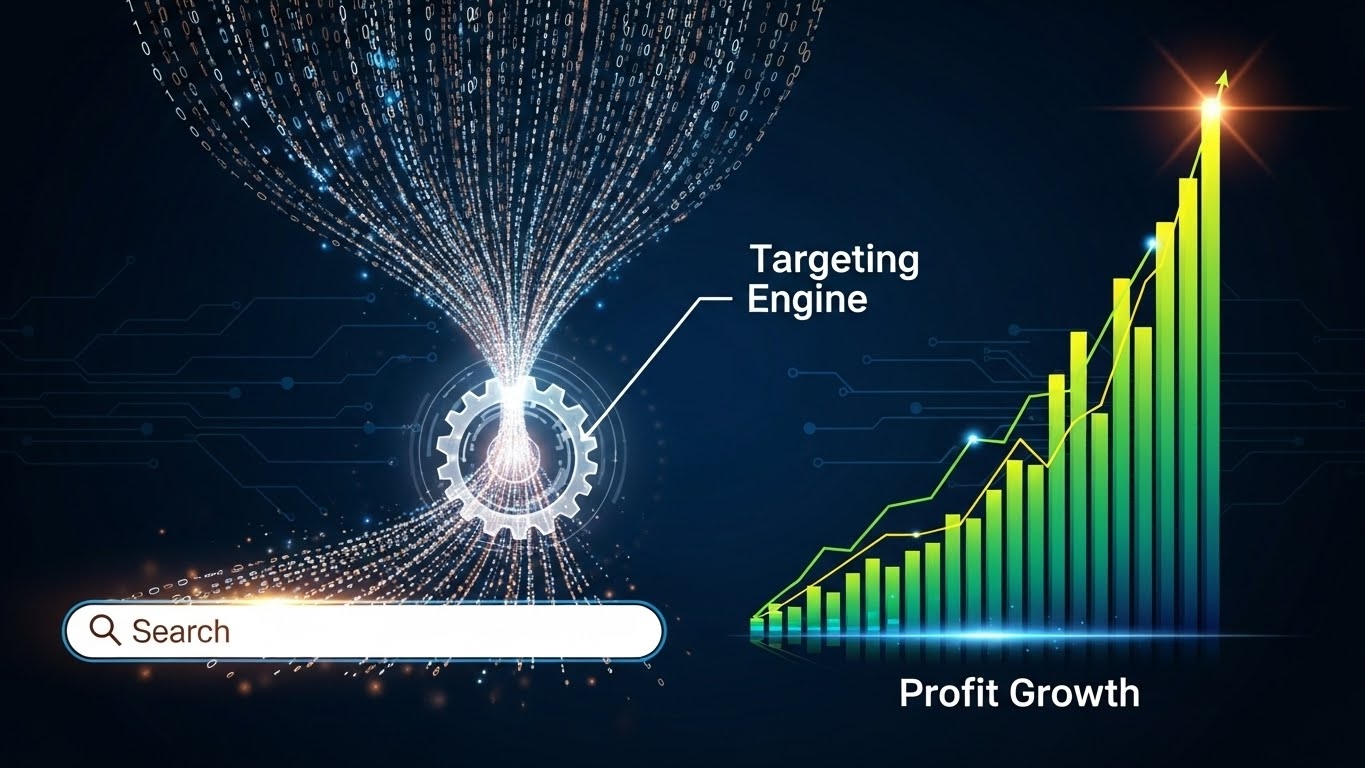
This is where the strategic imperative of Facebook ad targeting takes center stage. It’s not merely about placing ads; it’s about deploying a sophisticated methodology to connect with specific, highly interested audiences. Think of it as equipping your campaigns with a high-powered lens, allowing you to pinpoint potential customers amidst the vast expanse of online activity. This deliberate, data-driven approach transforms ad spend from a hopeful expense into a potent engine for growth, ensuring every impression contributes meaningfully to your objectives.

Consider the sheer waste inherent in a scattershot approach. Without precise targeting, a significant portion of your budget evaporates, reaching individuals with zero inclination towards your product or service. Facebook’s robust targeting capabilities reverse this paradigm. By meticulously segmenting users based on their expressed interests, behaviors, and demographics, businesses can dramatically amplify their message’s relevance. This isn’t just about efficiency; it’s about cultivating meaningful engagement and unlocking an unparalleled return on investment, turning casual browsers into committed advocates.
Unlocking Facebook Ad Targeting’s Core
At its heart, effective digital advertising hinges on precision. Facebook’s robust ad platform provides an unparalleled toolkit for marketers to segment and engage with audiences, moving far beyond spray-and-pray tactics. It’s a sophisticated ecosystem designed to connect businesses with the individuals most likely to value their offerings, transforming impressions into meaningful interactions.

This granular approach to audience identification is precisely what allows advertisers to maximize ad budget efficiency and return on investment, ensuring every dollar spent works harder. Understanding these mechanics is not just about running ads; it’s about engineering a direct line to your next customer.
Core Audiences Explained
The foundational layer of Facebook ad targeting begins with Core Audiences. These are built directly within the ad platform, leveraging the vast demographic, interest, and behavioral data Facebook collects from its users. Think of it as painting with broad strokes, yet with incredible detail.

- Demographics: This includes age, gender, location, language, education level, job titles, relationship status, and even parental status. For instance, a luxury stroller brand might target new parents, aged 28-40, living in affluent urban areas.
- Interests: Drawn from pages users like, posts they engage with, and topics they search for, interests allow for thematic targeting. A vegan food delivery service could target users interested in plant-based diets, organic produce, and wellness.
- Behaviors: This category delves into user actions, such as purchase behaviors, device usage, travel habits, or even political affiliations. An e-commerce brand selling high-end electronics might target users who are frequent online shoppers and use specific mobile devices.
Custom Audiences for Re-engagement
Moving beyond initial segmentation, Custom Audiences are where the magic of re-engagement truly shines. These audiences are built from your existing data, allowing you to reconnect with individuals who have already shown some level of interest in your business. It’s about nurturing warm leads.
Sources for Custom Audiences are diverse and powerful:

- Website Visitors: Using the Facebook Pixel, you can target people who visited specific pages, spent a certain amount of time on your site, or added items to their cart but didn’t purchase.
- Customer Lists: Uploading email addresses or phone numbers from your CRM allows you to target existing customers or leads directly. This is invaluable for loyalty programs or win-back campaigns.
- App Activity: For businesses with mobile applications, Custom Audiences can be created from users who have installed your app, completed specific in-app events, or haven’t opened it recently.
- Engagement: Target users who have interacted with your Facebook or Instagram pages, watched your videos, or engaged with your lead forms.
Lookalike Audiences for Expansion
Once you’ve identified your ideal customers or high-value leads through Custom Audiences, Lookalike Audiences become your growth engine. This powerful tool allows Facebook to find new users who share similar characteristics and behaviors with your existing valuable audience. It’s like cloning your best customers.
You provide a “source audience” – typically a Custom Audience of your best customers, website converters, or highly engaged users – and Facebook’s algorithms analyze their attributes. Then, it identifies a broader group of new users who are statistically similar. You can choose the size of your Lookalike Audience, typically ranging from 1% (most similar, smaller reach) to 10% (broader reach, less similarity) of the total population in your target country. A 1% Lookalike of your top 1000 purchasers often yields incredibly high-quality prospects.

Fundamental Targeting Pillars
These core audience types underpin the fundamental targeting pillars available to advertisers. Each offers a distinct approach to reaching the right people.
| Targeting Type | Description | Strategic Application |
|---|---|---|
| Demographic | Filters users based on age, gender, location, education, income, relationship status, and parental status. | Initial market entry, age-restricted products, localized services. |
| Interest & Behavior | Segments users by their expressed interests, online activities, purchase intent, and digital footprint. | Reaching niche hobbies, lifestyle brands, users with specific consumption patterns. |
| Value-Based | Focuses on identifying and acquiring users with a high potential for lifetime value, often via Lookalikes. | Maximizing long-term profitability, customer acquisition cost optimization, retention. |
Mastering these audience types and their interplay is paramount. It’s the difference between merely showing ads and strategically cultivating a loyal customer base.

Unlocking Peak Ad Performance: Advanced Targeting
Moving beyond foundational targeting, the real alchemy of Facebook advertising lies in its advanced capabilities. This isn’t just about reaching an audience; it’s about connecting with the right audience, at the right moment, with messaging that resonates deeply. In 2026, the platforms’ sophisticated tools demand a strategic, nuanced approach to truly maximize return.
Strategic Audience Expansion
Expanding your reach intelligently means looking beyond your immediate customer base. One potent method involves identifying and engaging competitor audiences. This isn’t about direct poaching, but rather understanding where your potential customers already congregate. Consider creating interest-based audiences around competitor brand pages, industry thought leaders, or specific publications favored by their customer base. This allows you to introduce your value proposition to individuals already demonstrating a clear affinity for your market segment.

For remarketing, custom audiences are your bedrock, but the depth of segmentation is key. Move beyond generic “website visitors.” Segment by specific actions: users who viewed a product page but didn’t add to cart, those who initiated checkout but abandoned, or even individuals who watched 75% or more of a specific video ad. Each segment represents a different level of intent and requires tailored messaging. Furthermore, creating value-based lookalike audiences is a game-changer. Instead of building lookalikes from all purchasers, upload a customer list segmented by Lifetime Value (LTV) or Average Order Value (AOV). A lookalike audience built from your top 5% highest-spending customers will inherently be more qualified than one built from all customers, leading to significantly higher-quality prospects.
Precision Targeting and Content Alignment
Achieving ultra-precise targeting demands a meticulous layering of audience attributes. This involves combining demographic filters (e.g., age, income brackets, specific geographic zones) with multiple, highly niche interests and behavioral data points. For instance, instead of targeting “fitness enthusiasts,” consider “individuals interested in high-intensity interval training (HIIT) who also follow specific wellness influencers and have recently purchased athletic apparel online.” This granular approach narrows your focus to a hyper-relevant segment.

The true power emerges when you combine these unique audience segments with your “unicorn content”—that exceptionally high-performing, engaging material that has historically driven significant results. Aligning this content means matching its core message, format, and emotional appeal directly to the specific pain points, desires, or aspirations of your precisely defined group. A detailed case study demonstrating ROI might resonate with a B2B audience of C-suite executives, while a visually stunning short video showcasing product benefits could captivate a younger, design-conscious consumer segment. This synergy ensures your most impactful content reaches those most likely to convert.
Optimizing with AI and Performance Diagnostics
Facebook’s ad relevance diagnostics offer a critical feedback loop for continuous improvement. These metrics—Quality Ranking, Engagement Rate Ranking, and Conversion Rate Ranking—provide immediate insights into how your ads are perceived relative to competitors targeting the same audience.

| Diagnostic Metric | Indicates | Actionable Insight |
|---|---|---|
| Quality Ranking | How your ad’s perceived quality compares to others. | Low score? Revamp creative, refine copy, ensure ad relevance to audience. |
| Engagement Rate Ranking | How your ad’s expected engagement rate compares. | Low score? Experiment with different ad formats, stronger hooks, or more compelling calls to action. |
| Conversion Rate Ranking | How your ad’s expected conversion rate compares. | Low score? Evaluate landing page experience, offer clarity, or ensure audience alignment with conversion goal. |
Leveraging these diagnostics allows for swift, data-driven adjustments.
Counter-intuitively, employing broad targeting can be a powerful strategy for audience discovery, especially when paired with robust creative and a clear conversion objective. By providing Facebook’s AI with a wider demographic (e.g., all adults 25-55 in a specific country) and minimal interest constraints, you empower the algorithm to identify high-converting segments it might not have found through manual layering. This approach relies heavily on the platform’s machine learning capabilities to find the most efficient path to conversion.

Further enhancing this AI-driven optimization is Advantage+ audience targeting. This feature allows you to provide the system with initial signals—like a custom audience of past purchasers or a few key interests—and then trust the AI to dynamically expand and refine the audience in real-time. It’s a shift from rigidly defined segments to a more fluid, adaptive approach where the platform’s intelligence actively seeks out the most receptive users, often uncovering segments you might never have considered manually. This blend of strategic input and algorithmic power is essential for maximizing ad spend efficiency in the current advertising ecosystem.
Unlocking Growth Through Smart Ad Targeting
The journey through the intricacies of Facebook ad targeting reveals a fundamental truth: it’s far more than a technical exercise. It’s the strategic bedrock upon which superior campaign results are built and genuine audience connections are forged. In an environment where attention is a finite resource, the ability to precisely identify, understand, and engage the right individuals at the right moment isn’t merely an advantage; it’s an imperative for enduring success.

Strategic Precision, Enduring Impact
At its core, strategic targeting is about intelligent resource allocation. It’s the difference between broadcasting a message into the void and whispering a tailored proposition directly into the ear of someone genuinely interested. We’ve explored how leveraging Core Audiences provides the initial segmentation, while Custom Audiences allow for invaluable re-engagement with those who already know your brand – perhaps a cart abandoner or a recent website visitor. Then, Lookalike Audiences act as powerful growth engines, extending your reach to new prospects who mirror your most valuable customers. This layered approach, combining demographic precision with behavioral insights and interest-based segmentation, ensures every dollar spent works harder, converting impressions into meaningful interactions.
Consider the stark contrast:
| Aspect | Reactive/Broad Targeting | Strategic/Adaptive Targeting |
|---|---|---|
| Campaign Results | Inconsistent, higher CPA, lower ROAS | Predictable, optimized CPA, higher ROAS |
| Audience Connection | Generic, often irrelevant messaging | Personalized, value-driven engagement |
| Resource Utilization | Inefficient, wasted ad spend | Maximized, focused on high-intent users |
| Long-Term Growth | Stagnant, difficult to scale | Sustainable, scalable, brand-building |
The Adaptive Edge
However, strategy alone isn’t enough. The platforms and user behaviors are dynamic, demanding an equally adaptive approach. The most effective marketers are those who treat their targeting as a living entity, constantly testing, refining, and responding to performance signals. This means diligently monitoring Facebook’s ad relevance diagnostics, understanding where your ads resonate and where they fall flat. It involves embracing broad targeting not as a default, but as a sophisticated tool for audience discovery, allowing the platform’s advanced AI, particularly through Advantage+ audience targeting, to uncover unexpected pockets of opportunity.
This iterative process, fueled by data and a willingness to experiment, transforms campaigns from static advertisements into responsive dialogues. It’s about understanding that a winning audience segment today might evolve tomorrow, and having the agility to pivot.
Fostering Deeper Connections
Ultimately, the goal transcends mere clicks and conversions. While these metrics are vital, the true power of masterful ad targeting lies in its capacity to foster deeper audience connections. When your ads consistently deliver relevant value, when they speak directly to an individual’s needs or aspirations, you’re not just selling a product; you’re building trust and cultivating loyalty. This is where “unicorn content” truly shines, aligning perfectly with ultra-precise segments to create memorable brand experiences.
By prioritizing strategic and adaptive targeting, marketers aren’t just optimizing ad spend; they’re investing in the very fabric of their brand’s relationship with its audience. It’s about moving beyond transactional interactions to create a community of engaged, loyal customers who feel seen, understood, and valued. This meticulous, data-driven approach is the definitive path to not just surviving, but thriving, ensuring your brand resonates powerfully and sustainably in a crowded marketplace.
FAQ
How do privacy changes impact targeting?
Increased data privacy regulations and platform updates necessitate greater reliance on first-party data. Advertisers must adapt to reduced third-party data availability, focusing on direct customer interactions.
What common targeting errors occur?
Frequent mistakes include audience overlap, excessively narrow segmentation, ignoring negative feedback, or failing to refresh creative for fatigued audiences.
How to measure targeting beyond clicks?
Evaluate effectiveness using multi-touch attribution models. These models credit various touchpoints in the customer journey, providing a holistic view of impact.
What is the Conversions API's purpose?
The Conversions API securely sends website or app data directly to Facebook. This enhances data accuracy for custom audiences and ad optimization, especially with browser-side tracking limitations.