pryanicom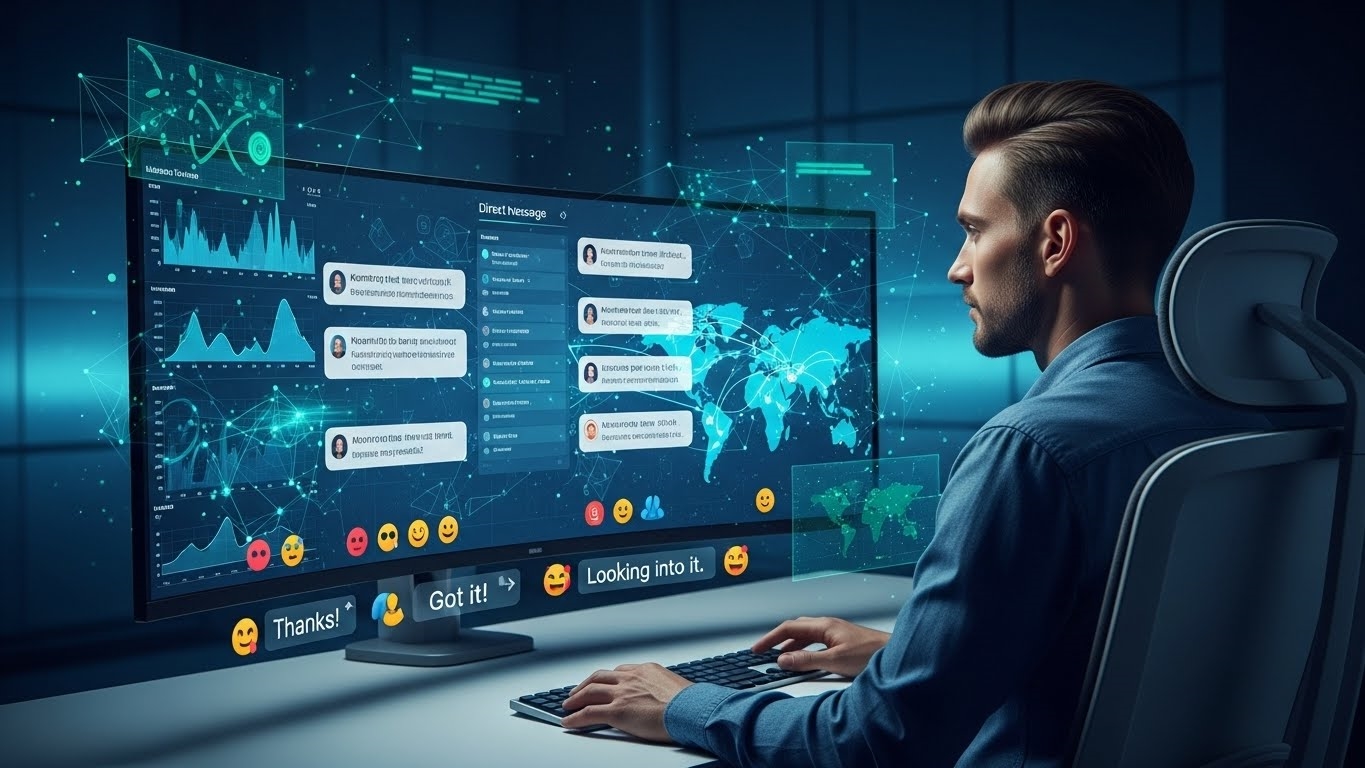
What if every inbound message could receive an instant, relevant, and personalized response, 24/7, without human intervention? This isn’t a futuristic fantasy; it’s the operational reality for leading brands in 2026, powered by direct message (DM) automation. At its core, DM automation deploys pre-programmed responses or sophisticated conversational flows, triggered by specific user actions or keywords within private messaging channels. Its fundamental purpose is to streamline communication, provide immediate support, qualify leads, and elevate the user experience—all at an unprecedented scale.
This isn’t merely about sending automated replies; it’s about architecting an intelligent communication layer that handles the deluge of daily inquiries, freeing human teams to tackle nuanced, high-value interactions. It transforms the inbox from a potential bottleneck into a dynamic hub of engagement. Let’s dissect the three primary mechanisms driving this revolution.

Autoreply Saved Responses (Canned Responses)
The foundational tier of DM automation involves autoreply saved responses, often termed “canned responses.” These are pre-written, static replies designed to address frequently asked questions or provide standard information. Think of them as meticulously crafted snippets of text, ready to deploy at a moment’s notice. A user asking “What are your business hours?” can instantly receive a consistent, accurate reply, ensuring immediate gratification and reducing repetitive manual effort. Their power lies in sheer speed and unwavering consistency.
Boolean Operator-Triggered Replies
Stepping up in sophistication, Boolean operator-triggered replies introduce a layer of conditional logic. Instead of a single keyword, these systems interpret combinations of terms using operators like AND, OR, and NOT. For instance, if a user types “shipping” AND “cost,” the system can pinpoint a specific FAQ about delivery expenses, bypassing general shipping information. This precision targeting allows for more nuanced responses, guiding users directly to the information they seek with greater accuracy than simple keyword matching.

AI-Powered Conversational Chatbots
The pinnacle of DM automation is achieved through AI-powered conversational chatbots. These advanced systems leverage natural language processing (NLP) and machine learning to understand user intent, not just keywords. They can engage in dynamic, multi-turn conversations, adapting their responses based on context and previous interactions. A user stating, “I want to return an item,” prompts the chatbot to ask for an order number, then guide them through the return policy or initiate the process. These intelligent agents offer highly personalized experiences, capable of solving complex problems and truly mimicking human interaction, making them indispensable for comprehensive customer engagement.
Unleashing Growth with Automated Messaging
In the dynamic arena of customer engagement, direct message (DM) automation isn’t merely a convenience; it’s a strategic imperative. Businesses that embrace this technology unlock profound efficiencies and elevate their customer interactions to unprecedented levels. This isn’t about replacing human connection, but rather augmenting it, allowing teams to focus on high-value tasks while routine queries are handled with precision and speed. The core function of automated direct messages, from simple autoreplies to sophisticated AI-powered conversational chatbots, is to streamline communication, making every interaction more impactful and scalable.

One of the most immediate and tangible benefits is the resource optimization and time savings for support teams. Imagine a scenario where your customer service agents spend hours each day answering repetitive questions about shipping policies, return procedures, or product specifications. DM automation steps in as the first line of defense, intercepting these common inquiries. By deploying automated responses triggered by keywords or interactive menus, a significant portion of inbound volume is resolved without human intervention. This frees up your human support specialists to tackle complex issues, provide empathetic solutions, and engage in problem-solving that truly requires a human touch. We’re talking about reallocating potentially dozens of hours weekly from mundane tasks to critical customer care and strategic initiatives.
Personalization at Scale
Beyond mere efficiency, DM automation excels at delivering enhanced personalization in customer interactions at scale. This might sound counterintuitive – automation and personalization? Yet, modern DM platforms leverage user data, past interactions, and even conversational context to tailor responses. A bot can greet a customer by name, reference their previous purchase, or offer product recommendations based on their browsing history. This dynamic content delivery ensures that even automated messages feel bespoke, fostering a stronger sense of connection and understanding. The ability to deliver this level of individualized attention to thousands of customers simultaneously is a game-changer, moving beyond generic blasts to meaningful, one-to-one engagement.

Always-On Customer Support
The world doesn’t operate on a 9-to-5 schedule, and neither should your customer support. DM automation provides continuous 24/7 customer support availability. Whether a customer is in London, Tokyo, or New York, they can receive instant answers to their questions, regardless of time zones or public holidays. This ‘always-on’ capability significantly boosts customer satisfaction, as immediate gratification is a powerful driver of positive sentiment. No more waiting for business hours; help is literally a message away, fostering loyalty and reducing frustration.
Strategic Lead Generation
DM channels are fertile ground for strategic lead generation and email list expansion. Through interactive conversations, automation can qualify leads, gather contact information, and guide users down a sales funnel. A user asking about a product can be seamlessly offered a link to a demo, asked if they’d like to receive a discount code via email, or invited to subscribe to a newsletter for exclusive content. This transforms casual inquiries into actionable leads, systematically growing your audience and sales pipeline.

Consider the contrast:
| Feature | Manual Support (Pre-Automation) | Automated DM Support (Post-Automation) |
|---|---|---|
| Response Time | Minutes to Hours | Instant (milliseconds) |
| Availability | Business Hours Only | 24/7/365 |
| Personalization | High (Human Effort) | High (Algorithmic & Contextual) |
| Scalability | Limited by Staff | Virtually Unlimited |
| Lead Capture | Reactive, Manual | Proactive, Integrated |
| FAQ Handling | Repetitive, Time-Consuming | Instant, Interactive |
Streamlined FAQ Delivery
Finally, DM automation offers streamlined interactive FAQ delivery, reducing common inquiries that often overwhelm human agents. Instead of static FAQ pages, customers can simply type their question into a DM, and the automation instantly provides the relevant answer, often with follow-up options or links to more detailed resources. This interactive approach not only resolves queries faster but also ensures consistency in information, eliminating discrepancies that can arise from different agents interpreting policies. It’s about empowering customers to find solutions on their terms, efficiently and accurately.

Mastering Cross-Platform DM Automation
The strategic deployment of direct message (DM) automation is no longer a luxury; it’s a fundamental pillar of responsive customer engagement in 2026. While the core principles of automation remain consistent, their implementation varies significantly across platforms. Understanding these nuances is key to building a cohesive, efficient communication strategy.
Instagram DM Automation Setup
Instagram, a visual powerhouse, has steadily enhanced its native DM automation capabilities, particularly through the Meta Business Suite. Businesses can now configure a robust set of automated responses directly within the platform. This includes:

- Instant Replies: Greet new message senders with a pre-written welcome, setting immediate expectations.
- Frequently Asked Questions (FAQs): Create a menu of common questions that users can tap, instantly receiving pre-approved answers. This deflects repetitive inquiries.
- Keyword Triggers: Design specific responses based on keywords or phrases detected in incoming DMs. For instance, a message containing “shipping” could trigger a link to your shipping policy.
- Story Replies: Automate responses to story mentions or reactions, fostering a more interactive experience.
These features empower brands to provide immediate value, qualify leads, and even guide users through basic troubleshooting without human intervention. The setup is intuitive, often involving simple rule-based logic within the Meta Business Suite interface.
X DM Automation with Third-Party Tools
X (formerly Twitter) presents a different challenge. While X offers some basic auto-reply functionalities, its API policies generally necessitate the use of third-party tools for sophisticated DM automation. These external platforms unlock a much deeper level of interaction:

- Advanced Auto-Replies: Beyond simple greetings, these tools can analyze message content for sentiment, intent, and specific keywords to deliver highly contextual responses.
- Lead Qualification & Nurturing: Integrate DMs directly into CRM systems, allowing for automated lead scoring, data capture, and even initiating follow-up sequences.
- Sentiment Analysis: Identify customer mood to prioritize urgent issues or route positive feedback appropriately.
- Rich Media Integration: Deliver images, videos, or interactive cards within automated DM flows, enhancing engagement.
Choosing a reputable third-party provider is paramount, ensuring compliance with X’s API terms and robust data security. These tools often connect via API, providing a bridge between your X DMs and a more powerful automation engine.
Facebook’s Native DM Automation
Facebook Messenger, with its extensive user base, boasts some of the most comprehensive native DM automation tools available. Again, the Meta Business Suite serves as the central hub for configuration. Businesses can leverage:

- Welcome Messages: Personalize the initial interaction when a user first messages your page.
- Away Messages: Inform users of your availability outside business hours, providing alternative contact methods or estimated response times.
- Appointment Booking: Integrate directly with scheduling systems, allowing users to book appointments or consultations through automated flows.
- Lead Forms & Product Recommendations: Guide users through a series of questions to gather information or present relevant products based on their responses.
- Complex Flows: Build multi-step conversational sequences that mimic human interaction, guiding users through sales funnels or support processes.
Facebook’s native tools are powerful enough for many businesses to manage significant portions of their customer interactions directly within the platform, often reducing the immediate need for external solutions for basic to intermediate automation.
Unified DM Automation Platforms
Managing distinct automation strategies across Instagram, X, and Facebook can quickly become unwieldy. This is where comprehensive, unified DM management platforms shine. These solutions aggregate all your direct messages into a single, centralized inbox, offering a holistic view of customer interactions.

| Platform | Native Automation Strengths | Third-Party Tool Role | Unified Platform Benefit |
|---|---|---|---|
| Instant replies, FAQs, story replies | Advanced flows, CRM sync | Centralized inbox, cross-platform analytics | |
| X | Basic auto-replies | Core for advanced automation | Consistent voice, integrated workflows |
| Welcome, away, booking, lead forms | AI chatbots, complex integrations | Holistic view, team collaboration |
These platforms go beyond simple aggregation. They enable:
- Consistent Brand Voice: Apply uniform automation rules and responses across all channels.
- Cross-Platform Analytics: Gain insights into customer behavior and automation performance across your entire presence.
- Team Collaboration: Route messages to specific agents, track resolution times, and ensure no DM goes unanswered.
- CRM Integration: Seamlessly push customer data and conversation history into your customer relationship management system.
By consolidating DM management, businesses achieve unparalleled efficiency, ensuring every customer interaction, regardless of its origin, is handled with speed, precision, and a unified brand experience. This integrated approach is critical for scaling customer engagement without sacrificing quality.

Integrating Automation for Peak Engagement
The discourse around direct message (DM) automation often centers on its ability to handle volume, but the true power lies in its strategic integration. In 2026, the most forward-thinking organizations recognize that automation isn’t about replacing human interaction; it’s about elevating it. The objective is to construct a seamless, intelligent customer journey where automated systems and human agents collaborate, each excelling in their respective domains. This synergy unlocks unparalleled efficiency and a profoundly enriched customer experience.
Blending Bots and Human Touch
The critical challenge for any organization deploying DM automation is striking the perfect balance between instant, automated responses and the nuanced empathy of human customer service. For routine inquiries—FAQs, order status checks, or basic troubleshooting—automation shines. It delivers immediate, consistent answers, freeing up human agents from repetitive tasks. However, when a customer presents a complex problem, expresses frustration, or requires a truly personalized solution, the system must gracefully hand off the conversation to a human.
This handoff isn’t merely a transfer; it’s an intelligent escalation. The automated system should collect pertinent information, understand the user’s intent, and provide the human agent with a comprehensive context of the interaction history. This ensures the customer doesn’t have to repeat themselves, fostering a sense of being understood and valued.
| Interaction Type | Best Handled By | Key Benefit |
|---|---|---|
| Simple Queries | Automation | Instant resolution, 24/7 availability |
| Lead Qualification | Automation | Efficient data capture, consistent screening |
| Complex Issues | Human Agent | Empathy, nuanced problem-solving, trust |
| Emotional Support | Human Agent | De-escalation, relationship building |
| Personalized Sales | Hybrid (Bot & Human) | Initial qualification, human closing |
Contextual Intelligence in DMs
Beyond simple auto-replies, advanced DM automation leverages sophisticated features to create holistic engagement. This means integrating with customer relationship management (CRM) systems, e-commerce platforms, and other data sources. Imagine a scenario where a customer messages about a product. An AI-powered chatbot, drawing on their purchase history, browsing behavior, and even previous support tickets, can offer hyper-personalized recommendations or proactively address potential issues.
This level of contextual intelligence allows for dynamic content delivery, where messages adapt in real-time based on user input and historical data. It enables proactive outreach—for instance, a DM triggered when a customer abandons a shopping cart, offering assistance or a special incentive. The goal is to anticipate needs and provide relevant, timely information, transforming a transactional interaction into a meaningful engagement. This isn’t just about speed; it’s about relevance and foresight.
Reshaping Customer Journeys
The transformative impact of strategically integrated DM automation on both customer experience (CX) and operational efficiency is profound. For customers, it means instant access to support, personalized interactions that make them feel recognized, and a seamless journey regardless of the complexity of their query. No longer are they waiting on hold or navigating labyrinthine phone menus; help is literally a message away, around the clock. This immediacy and personalization cultivate loyalty and satisfaction.
Operationally, the benefits are equally compelling. By automating routine inquiries, businesses can significantly reduce the workload on their human support teams. This allows agents to focus on high-value, complex cases that truly require human ingenuity and empathy, leading to higher job satisfaction and reduced burnout. The data collected through automated interactions also provides invaluable insights into customer pain points and preferences, informing product development and service improvements. Ultimately, DM automation isn’t just a tool; it’s a strategic imperative, reshaping how organizations connect with their audience, driving both efficiency and deeper customer relationships.
FAQ
What are data privacy considerations?
Companies must comply with regulations like GDPR or CCPA when collecting or processing user data via DMs. Transparency is key.
What common automation mistakes?
Over-automating simple interactions, using generic language, or failing to offer human escalation frustrate users.
Integrate DM automation with CRM?
Yes, integrating with CRM systems allows for centralized customer data, personalized follow-ups, and improved sales tracking.
How to optimize chatbot responses?
Regularly review conversation logs, refine intent recognition, and update knowledge bases with new information.