pryanicom
What if the most formidable barrier to content velocity—the blank page—simply ceased to exist? In 2026, that’s not a hypothetical; it’s the operational reality for countless creators. We’re witnessing a profound redefinition of content generation, powered by intelligent systems that are far more than just sophisticated word processors.
Decoding the Algorithmic Engine
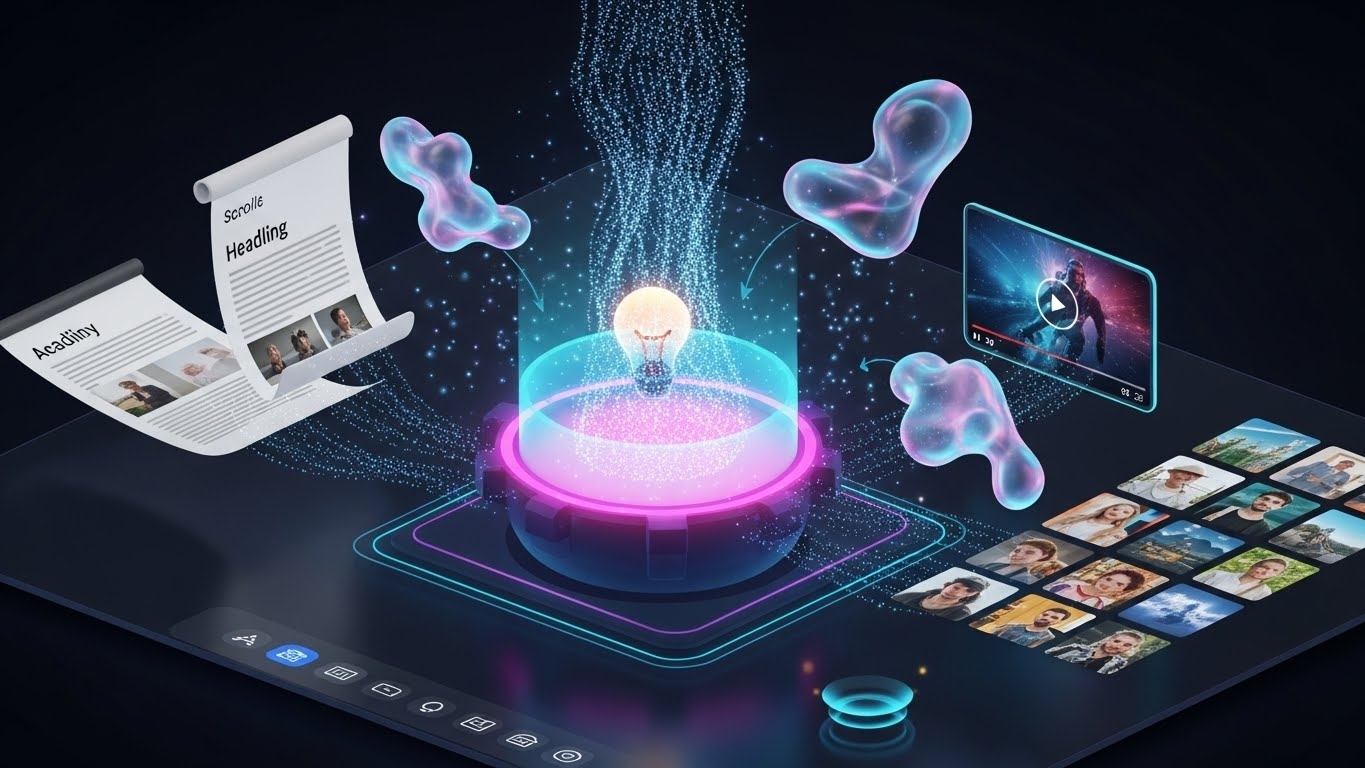
At their core, AI content creation tools are sophisticated software applications leveraging advanced machine learning models, primarily large language models (LLMs) and generative adversarial networks (GANs). These systems analyze vast datasets of existing content—text, images, audio, and video—identifying intricate patterns, styles, and structures. Their operational principle is elegantly powerful: given a prompt or a set of parameters, they generate new, original content that adheres to learned characteristics. This isn’t rote copying; it’s a complex synthesis, allowing for everything from drafting compelling blog posts to fabricating hyper-realistic visual assets.

The 2026 Content Revolution
The impact on content generation in 2026 is nothing short of a paradigm shift. These tools are no longer mere assistants; they are integral co-pilots in the creative journey. They’ve accelerated ideation cycles from days to minutes, enabled hyper-personalized content at unprecedented scale, and freed human strategists to focus on nuanced storytelling and audience engagement rather than repetitive drafting. This isn’t just about speed; it’s about strategic leverage, transforming how brands connect and communicate. The ability to iterate rapidly, test diverse messaging, and localize content for myriad segments has become a fundamental competitive advantage, reshaping creative workflows and elevating the very definition of content production.
Unpacking the AI Content Creation Toolkit
The sheer velocity of innovation in AI-powered content generation has ushered in an era where strategic deployment of these tools is paramount. Gone are the days of one-size-fits-all solutions; today’s most effective content strategies leverage a specialized arsenal, each tool meticulously crafted for distinct creative challenges. Understanding the nuances of these platforms is no longer optional—it’s a competitive imperative.

These specialized tools are not just novelties; they are fundamentally reshaping how content is conceived, produced, and distributed, redefining the operational principles for every content creator and marketer. They empower teams to transcend traditional limitations, pushing the boundaries of what’s possible in content creation.
Powering Text and Visual Content
At the forefront of this revolution are comprehensive AI platforms designed for broad content generation, spanning both text and visuals. These aren’t merely glorified word processors or image filters; they are sophisticated engines capable of understanding context, tone, and artistic direction.

- ChatGPT stands as a testament to the power of conversational AI. Its unparalleled versatility allows for everything from drafting intricate long-form articles and crafting compelling email sequences to brainstorming complex campaign ideas. Its strength lies in its ability to engage in nuanced dialogue, refining outputs through iterative prompts, making it an indispensable thought partner for any content strategist.
- Jasper, on the other hand, carves its niche with a sharp focus on marketing and sales copy. Engineered with a deep understanding of conversion psychology, Jasper excels at generating high-performing ad copy, product descriptions, and landing page content that resonates with target audiences. Its pre-built templates and brand voice integration capabilities ensure consistency and impact across diverse channels.
- OwlyWriter emerges as a robust solution for content planning and structured text generation. Often integrated into broader social media management platforms, it shines in generating blog outlines, social media posts, and even comprehensive content calendars. Its strength lies in streamlining the ideation-to-publication workflow, ensuring a steady stream of relevant, engaging content.
- Midjourney has redefined visual content creation. Moving beyond simple stock imagery, Midjourney’s advanced generative capabilities produce stunning, high-fidelity images and artistic compositions from textual prompts. Whether for conceptual art, marketing visuals, or unique brand assets, its ability to interpret abstract ideas into tangible graphics is nothing short of transformative, offering unparalleled creative freedom.
To illustrate their distinct strengths, consider this breakdown:
| Tool | Primary Function | Key Strength | Best For |
|---|---|---|---|
| ChatGPT | General Text Generation | Conversational Versatility | Long-form content, brainstorming, dialogue |
| Jasper | Marketing Copy | Conversion-focused output | Ads, landing pages, product descriptions |
| OwlyWriter | Content Planning/Text | Workflow Streamlining | Blog outlines, social posts, content calendars |
| Midjourney | Visual Generation | High-fidelity artistic output | Unique brand visuals, conceptual art |
Precision Tools for Specific Needs
Beyond these comprehensive platforms, a vibrant ecosystem of highly specialized AI tools addresses granular content requirements, proving that even the smallest content elements can benefit from intelligent automation. These accessible tools are designed for speed and precision, ensuring every piece of content, no matter how brief, is optimized for impact.

- Caption Generators leverage AI to craft concise, engaging text for social media posts. They analyze image content, relevant keywords, and desired tone to produce captions that capture attention and encourage interaction, saving precious time for social media managers.
- Hashtag Generators are indispensable for discoverability. These tools analyze content, identify trending topics, and suggest a mix of broad and niche hashtags, significantly boosting content visibility and reach across platforms like Instagram, TikTok, and X.
- Video Description Generators optimize video content for search engines and viewer engagement. By analyzing video transcripts and themes, they create compelling, keyword-rich descriptions that improve SEO, provide context, and include clear calls-to-action, ensuring videos reach their intended audience and drive desired outcomes.
These focused applications demonstrate that AI’s utility extends to every facet of content creation, from grand strategic initiatives to the minute details that collectively define a brand’s presence. The integration of these tools into daily workflows is not just about efficiency; it’s about elevating the quality and strategic intent of every piece of content produced.
Mastering Content with AI Advantage
The integration of AI content creation tools isn’t merely an incremental upgrade; it’s a fundamental shift in how content teams operate in 2026. These sophisticated platforms are not just automating tasks; they are fundamentally reshaping strategic approaches, empowering marketers to achieve unprecedented levels of output and impact. The core benefits extend far beyond simple automation, touching every facet of content development.

Core Benefits of AI Integration
Time Efficiency Redefined
Imagine slashing the time spent on initial drafts or research by 70%. AI tools excel at this, transforming hours of manual effort into minutes. For instance, generating 10 unique blog post outlines, complete with keyword suggestions and meta descriptions, can now be an almost instantaneous process. This frees up human talent for higher-order tasks like strategic planning and nuanced storytelling.
Idea Generation Amplified
Staring at a blank page becomes a relic of the past. AI acts as an indefatigable brainstorming partner, capable of analyzing vast datasets to unearth trending topics, audience pain points, and competitor gaps. Prompting an AI with a broad theme can yield dozens of innovative content angles, headline variations, and even entirely new campaign concepts, all within moments.

Social SEO Precision
Optimizing content for diverse social platforms demands specific nuances. AI tools are adept at crafting compelling captions, relevant hashtags, and engaging video descriptions tailored to each platform’s algorithms and character limits. They can analyze real-time trends to suggest the most impactful keywords, ensuring content achieves maximum visibility and engagement across channels.
Team Scalability Unlocked
For lean content teams, AI acts as a force multiplier. A small group can now manage content volumes previously requiring a much larger headcount. This isn’t about replacing roles, but about augmenting capabilities, allowing a two-person team to effectively cover content needs for multiple product lines or geographic regions, a feat unthinkable just a few years ago.

Productivity Enhancement, Exponential
The cumulative effect of these benefits is a dramatic uplift in overall productivity. Content strategists can pivot from repetitive drafting to focusing on brand narrative, audience connection, and performance analysis. This shift allows for a more strategic, less tactical, approach to content marketing, driving superior results.
Expert Strategies for Maximizing AI
Integrating AI effectively requires more than just adopting a tool; it demands a strategic framework.

Streamlining Content Processes
The most successful teams embed AI directly into their content workflows. This often means using AI for the initial ideation and drafting phases, followed by human refinement. Consider a pipeline where AI generates a first draft of a whitepaper, a human expert then injects proprietary insights and brand voice, and finally, a proofreader ensures factual accuracy and stylistic polish. This collaborative model accelerates production without sacrificing quality.
Recognizing AI’s Limitations
While powerful, AI is not a panacea. It lacks genuine empathy, nuanced understanding of human emotion, and the ability to generate truly original, groundbreaking creative concepts without significant human guidance. Over-reliance can lead to generic, bland, or even factually incorrect outputs (hallucinations). Human oversight remains paramount for accuracy, authenticity, and injecting that unique brand spark.

Maintaining Brand Consistency
A critical challenge is ensuring AI-generated content aligns perfectly with a brand’s established voice and style. This requires meticulous setup: feeding AI tools comprehensive style guides, tone-of-voice documents, and a curated corpus of high-performing, on-brand content. Regular audits of AI outputs and iterative refinement of prompts are essential to maintain a cohesive brand identity across all content touchpoints.
Here’s a snapshot of how AI integrates into a modern content workflow:

| Content Stage | Traditional Approach | AI-Augmented Approach | Key Benefit |
|---|---|---|---|
| Ideation | Manual research, team brainstorm | AI trend analysis, topic generation, keyword mapping | Rapid, data-driven concept development |
| First Draft | Human writer, extensive research | AI-generated outline & initial draft | Significant time savings, consistency |
| Refinement | Multiple human edits | Human expert injects brand voice, nuance, facts | Quality assurance, strategic alignment |
| Optimization | Manual SEO, social tailoring | AI for captions, hashtags, meta descriptions | Enhanced visibility, platform-specific appeal |
The future of content creation isn’t about AI versus humans; it’s about AI with humans, forging a symbiotic relationship that elevates both efficiency and creative output.
FAQ
Ethical concerns with AI content?
AI models can perpetuate biases from training data. Human review mitigates this.
Who owns AI-generated content?
Ownership often depends on tool terms of service. Legal frameworks are still developing.
Is data private with AI tools?
Data privacy varies by tool provider. Review their data handling policies.
What is the human role in AI content?
Humans provide creative direction, refine output, ensure accuracy, and add unique voice.