pryanicom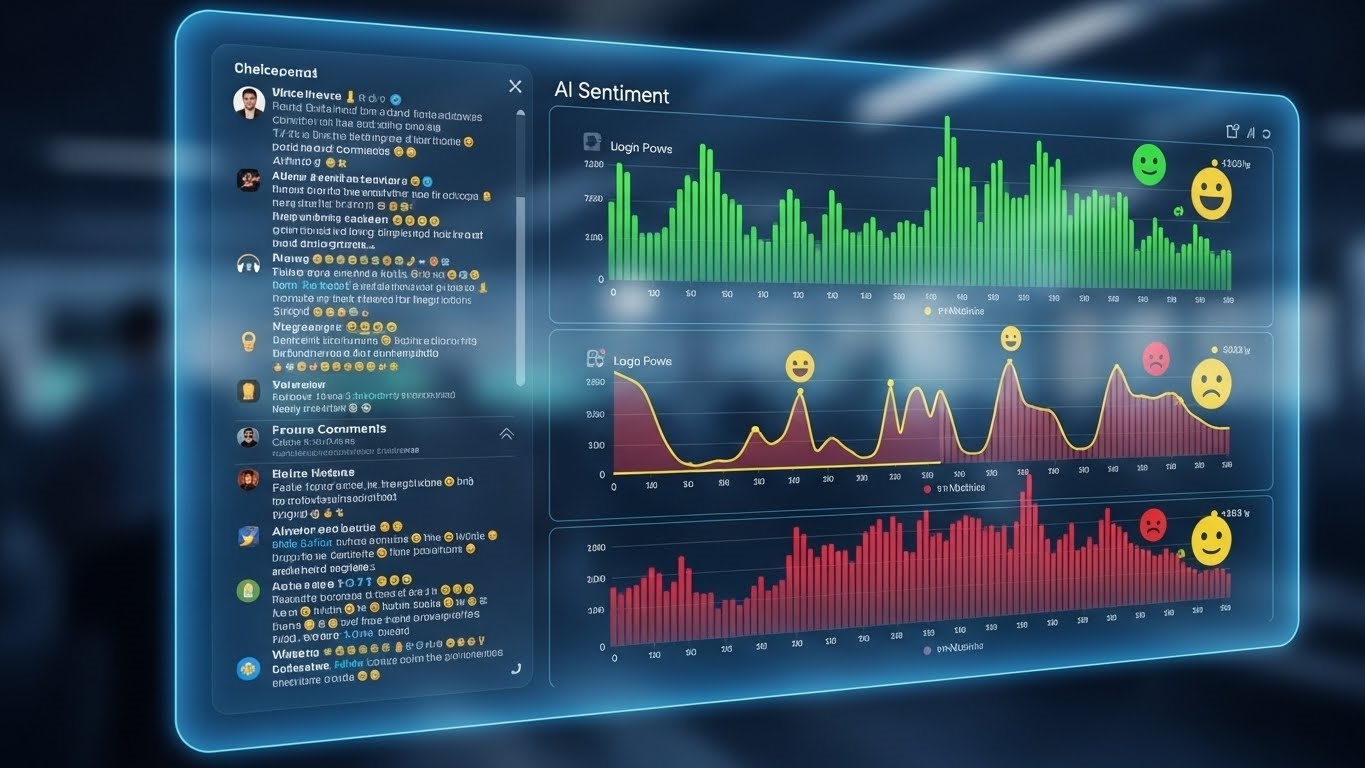
What if you could instantly tap into the collective consciousness of your audience, understanding not just what they say, but how they truly feel? In 2026, this isn’t a hypothetical; it’s the operational reality powered by sentiment analysis tools. These sophisticated platforms move beyond simple keyword monitoring, diving deep into the emotional undercurrents of public discourse to decode the true pulse of your brand’s perception.
Decoding the Core Function of Sentiment Analysis
At its heart, a sentiment analysis tool is an interpreter of human emotion expressed through text. It ingests vast quantities of unstructured data—social media posts, reviews, news articles, customer service interactions—and then classifies the emotional tone as positive, negative, or neutral. But the real power lies in its ability to go granular, identifying specific emotions like joy, anger, surprise, or sadness, and even detecting nuances like sarcasm or irony. This transformation of raw language into quantifiable emotional data provides an unparalleled lens into public opinion.

The Engine Room: AI, Machine Learning, and NLP
The precision of these tools stems directly from their reliance on advanced computational linguistics. Artificial intelligence and machine learning algorithms are the brains, trained on massive datasets to recognize patterns, context, and emotional cues that even humans might miss in sheer volume. Natural Language Processing (NLP) is the critical component that enables machines to understand, interpret, and generate human language. NLP models dissect sentence structure, identify entities, and disambiguate meaning, allowing the system to grasp the subtle complexities of human communication and assign accurate sentiment scores.
Elevating Brand Perception Through Insight
The actionable intelligence gleaned from sentiment analysis offers profound advantages for brand perception. Imagine proactively identifying a brewing customer dissatisfaction trend before it escalates into a crisis, or pinpointing exactly which product features delight your users most. These tools empower brands to:

- Refine messaging: Tailor communications to resonate more deeply by understanding audience emotional responses.
- Enhance product development: Surface unmet needs or areas for improvement directly from customer feedback.
- Strengthen customer relationships: Address negative sentiment swiftly and publicly, demonstrating responsiveness and care.
- Gain competitive advantage: Monitor competitor sentiment to identify their strengths and weaknesses in the market.
By providing a continuous, data-driven understanding of how your brand is perceived, sentiment analysis tools are indispensable for shaping a resilient and positive public image.
Selecting Your Sentiment Analysis Powerhouse
Pinpointing the ideal sentiment analysis tool requires a clear understanding of your operational scale and strategic objectives. With an array of platforms promising deep insights into public opinion, selecting the right one hinges on matching capabilities to your specific needs. From comprehensive enterprise solutions to agile options for individual creators, each tool offers a distinct blend of features designed to decode the nuances of online discourse. These platforms are not just data aggregators; they are sophisticated interpreters, using advanced algorithms to gauge the emotional tone behind mentions, comments, and reviews. By leveraging these tools, organizations gain the critical ability to understand, utilize, and ultimately enhance their brand perception across various channels.

Best Overall Sentiment Tools
For organizations seeking a robust, all-encompassing solution, certain platforms consistently deliver. These tools excel in breadth of features, accuracy, and integration capabilities, making them suitable for a wide array of use cases.
- Hootsuite: A long-standing name in social media management, Hootsuite extends its prowess into sentiment analysis with an integrated suite that allows for direct action from insights. Its unified dashboard approach means you’re not just seeing data; you’re acting on it, making it a powerful choice for those who value seamless workflow from insight to engagement.
- Talkwalker: Talkwalker stands out for its expansive data coverage, pulling from over 150 million sources globally. Its AI-powered sentiment engine provides granular insights, differentiating between positive, negative, and neutral mentions with impressive accuracy, often detecting sarcasm and nuanced language that simpler tools miss. This depth makes it invaluable for strategic brand health monitoring.
| Feature/Tool | Hootsuite | Talkwalker |
|---|---|---|
| Core Strength | Integrated Social Management & Action | Expansive Data & Granular AI Sentiment |
| Key Benefit | Unified workflow, direct engagement | Deep strategic insights, nuance detection |
| Ideal For | Brands needing actionable insights within social workflow | Enterprises requiring comprehensive, accurate global monitoring |
Tools for Large Teams
Enterprise-level operations demand tools that can handle immense data volumes, complex reporting structures, and multi-user access. These platforms are built for scale and collaboration.

- Brand24: This monitoring powerhouse offers robust real-time tracking across social media, news, blogs, and forums. For large teams, its competitive analysis features and automated reporting are particularly valuable, allowing for swift identification of trends and influencer engagement opportunities.
- Meltwater: With a strong foundation in media intelligence and PR, Meltwater provides comprehensive media monitoring across traditional and social channels. Its sentiment analysis is integrated into a broader suite that supports press outreach, journalist relations, and extensive brand reputation management, ideal for coordinated communication strategies.
Tools for Small Teams
Agility and cost-effectiveness are paramount for smaller teams. These tools offer powerful sentiment analysis without the overhead or complexity of enterprise solutions, focusing on essential insights.
- Buffer: Primarily known for social media scheduling, Buffer’s analytics suite includes fundamental sentiment tracking. It’s an excellent choice for small teams managing their social presence, offering straightforward insights into audience reactions to their content directly within their publishing workflow.
- Awario: Designed with affordability and comprehensive monitoring in mind, Awario tracks mentions across social media, news, blogs, and the web. Its “Leads” feature, which identifies potential customers discussing your product or competitors, adds a unique, actionable layer to its sentiment capabilities, perfect for lean marketing efforts.
Tools for Creators and Influencers
For individuals and small creative teams, understanding audience sentiment is crucial for content strategy and personal brand development. These tools offer specialized insights tailored to the creator economy.

- Exolyt: Specializing in TikTok analytics, Exolyt provides creators with deep dives into their content performance, including audience sentiment. Understanding how specific videos resonate emotionally allows creators to refine their approach and build stronger connections with their followers.
- Keyhole: This platform excels in hashtag tracking and influencer measurement. For creators and influencers, Keyhole’s ability to analyze sentiment around specific campaigns or branded content offers invaluable feedback, helping to optimize engagement strategies and demonstrate ROI to partners.
Tools for Agencies
Agencies require tools that can manage multiple clients, generate detailed reports, and provide white-label options. These platforms prioritize client management and comprehensive reporting.
- Agorapulse: A favorite among agencies, Agorapulse combines social media management with robust reporting, including sentiment analysis. Its intuitive interface and client-specific dashboards make it easy to manage diverse client portfolios and present clear, actionable insights on brand perception.
- Mentionlytics: Offering comprehensive web and social media monitoring, Mentionlytics is built for reputation management across various client accounts. Its sentiment analysis capabilities are complemented by influencer discovery and competitive intelligence, providing agencies with a holistic view of their clients’ online presence.
Best Free Sentiment Tools
Entry-level or ad-hoc sentiment analysis doesn’t always require a significant investment. These free options provide valuable insights for basic monitoring and quick checks.

- Hootsuite (Free Plan): While limited compared to its paid tiers, Hootsuite’s free plan offers basic social media monitoring, which can include rudimentary sentiment indicators for personal brands or very small projects. It’s an excellent starting point for familiarizing oneself with social listening.
- Social Searcher: This tool provides real-time social media search and analysis without requiring an account. It offers basic sentiment analysis alongside mention tracking across Twitter, Facebook, and other platforms, making it ideal for quick, unauthenticated checks on brand mentions or trending topics.
| Feature/Tool | Hootsuite (Free Plan) | Social Searcher |
|---|---|---|
| Core Strength | Basic monitoring within a familiar platform | Real-time public social mentions |
| Key Benefit | Entry-level brand tracking, familiar interface | Quick, unauthenticated checks across major platforms |
| Ideal For | Individuals, small projects, basic brand health checks | Rapid ad-hoc searches, immediate trend spotting |
Crafting Superior Brand Perception: A Strategic Toolkit
Navigating the intricate currents of public opinion demands more than just observation; it requires strategic intervention. With robust sentiment analysis tools at our disposal in 2026, the path to shaping and enhancing brand perception is clearer than ever. This isn’t about passively watching; it’s about actively engineering a more favorable narrative.
Establishing Sentiment Baselines
Before you can chart a course, you need to know your starting point. Establishing sentiment benchmarks is foundational for any meaningful analysis. Without these baselines, a “positive” sentiment score of 75% is just a number. Is it good? Bad? Average? Context is everything. Begin by aggregating historical data, ideally spanning several quarters, to understand your brand’s typical sentiment fluctuations. Tools like Talkwalker or Brand24 excel at this, allowing you to pull years of mentions and categorize them. Next, compare your performance against industry averages. If your sector typically hovers around 60% positive sentiment, your 75% looks stellar. Conversely, if the industry norm is 90%, you have work to do. Finally, set specific benchmarks for campaigns or product launches. Measuring sentiment before, during, and after a major initiative provides an invaluable feedback loop, quantifying the impact of your efforts.

Decoding Competitor Strategies
The intelligence gleaned from sentiment analysis extends far beyond your own operations. Analyzing competitor strategies offers a potent competitive advantage. By monitoring how rivals are perceived, you can identify their strengths, pinpoint their vulnerabilities, and learn from their successes and missteps. Are their product launches consistently met with enthusiasm, or do specific features draw widespread criticism? Does their customer service generate loyalty or frustration?
Consider this: a competitor’s recent marketing push emphasizing sustainability might have generated an 88% positive sentiment, while your similar campaign achieved only 62%. This disparity isn’t just a statistic; it’s a direct prompt to dissect their messaging, audience targeting, and execution. Tools can help you track these nuances, revealing which competitor initiatives resonate most deeply with shared audiences.

| Analysis Focus | Your Brand (Benchmark) | Competitor A (Insight) |
|---|---|---|
| Product Launch | Average 75% positive sentiment for new features | 90% positive for ease-of-use, 55% for pricing |
| Customer Service | 80% resolution satisfaction, 15% negative mentions | 92% resolution satisfaction, 5% negative mentions |
| Campaign Resonance | “Innovation” campaigns average 70% positive | “Community” campaigns average 85% positive |
Proactive Engagement for Positive Sentiment
The real power of sentiment analysis lies in its ability to inform proactive engagement. This isn’t merely about reacting to mentions; it’s about initiating conversations and shaping perceptions. Identify your brand advocates – those influential voices consistently generating positive sentiment – and empower them. Share their content, amplify their messages, and consider exclusive early access to new offerings.
Equally critical is addressing negative sentiment with speed and empathy. A recurring complaint about a product’s user interface, flagged by your analysis tool, isn’t just a problem; it’s an opportunity. Respond publicly, offer solutions, and, crucially, feed this direct user feedback into your product development cycle. This demonstrates that you’re listening, you care, and you’re committed to improvement. Creating content that directly addresses common pain points or celebrates shared successes, all informed by sentiment data, cultivates a stronger, more positive relationship with your audience.

Patience and Consistent Effort
Finally, understand that influencing brand sentiment is not a one-off project; it’s a continuous commitment. Patience and consistent effort are paramount. A single viral moment might temporarily spike positive sentiment, but sustained, authentic perception is built brick by brick, interaction by interaction, over months and years. Avoid the temptation of ‘sentiment washing’ – superficial attempts to appear positive without genuine change. Audiences are discerning. Each thoughtful response, each product improvement driven by user feedback, each piece of content that genuinely resonates, contributes to a robust and resilient positive brand image. This long-term dedication is what truly differentiates enduring brands in a crowded marketplace.
FAQ
What challenges hinder sentiment analysis accuracy?
Sarcasm, irony, cultural context, and domain-specific language often present interpretation difficulties. Human review remains crucial.
What data sources do tools analyze?
Tools typically analyze social media, news articles, reviews, forums, customer support tickets, and survey responses.
What privacy concerns arise from sentiment analysis?
Data collection practices raise privacy questions. Ethical use requires transparency, anonymization, and adherence to regulations like GDPR.
Is human oversight necessary for sentiment analysis?
Yes, human review is vital for complex cases, fine-tuning models, and ensuring nuanced interpretation beyond automated scores.