pryanicom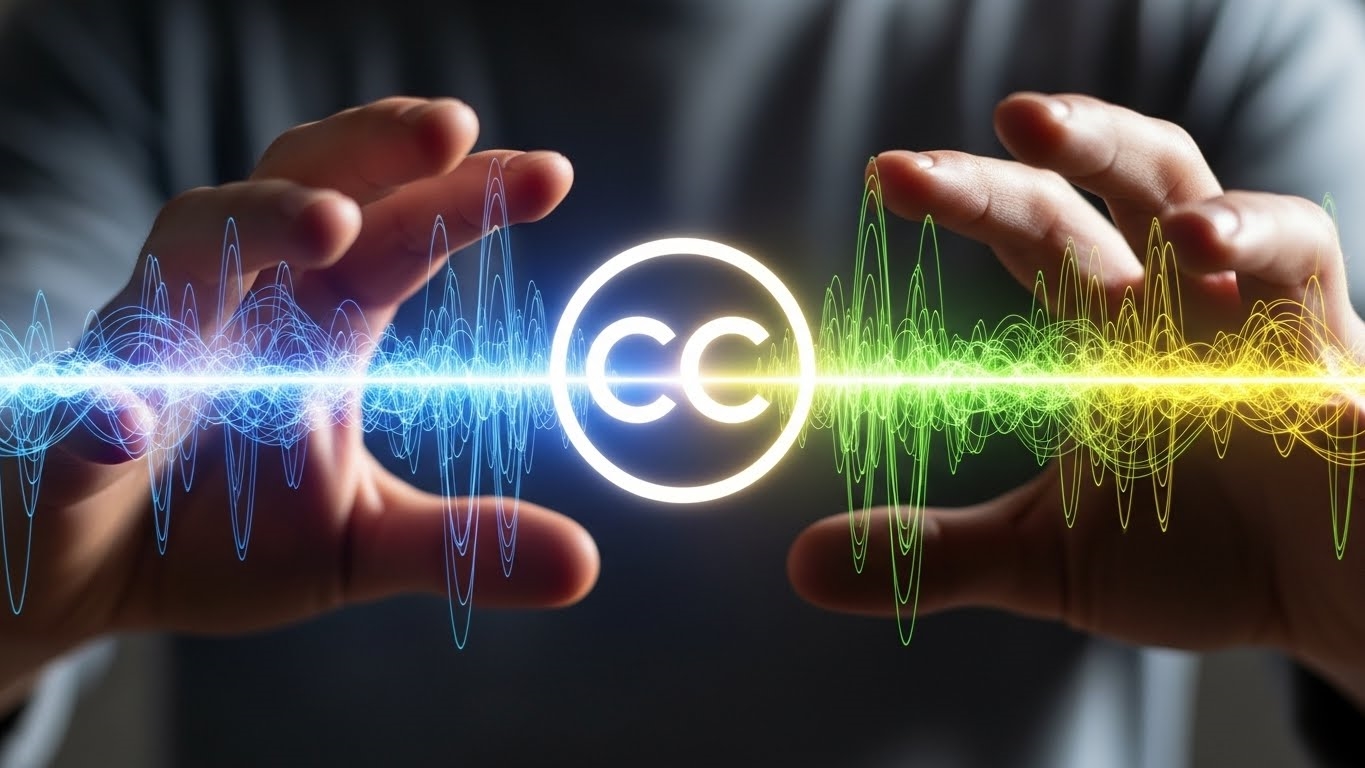
What if the perfect soundtrack for your next campaign was freely available, legally, and ethically, without the prohibitive costs of traditional licensing?
In 2026, where content velocity is paramount, Creative Commons (CC) licenses offer a revolutionary framework. They empower creators to share work and marketers to legally leverage a vast audio reservoir. Far from just “free music,” CC provides a sophisticated, standardized system of permissions, allowing artists to dictate how their creations are used, reused, and adapted. This nuanced alternative to traditional copyright’s “all rights reserved” fosters collaboration and innovation. Understanding these licenses unlocks strategic advantage, particularly the crucial distinction between commercial and non-commercial usage.

Navigating the Commercial-Friendly Licenses
For any project with commercial intent, three primary Creative Commons licenses, alongside CC0, are indispensable:
- CC0 (Public Domain Dedication): The ultimate freedom. Creators waive all rights, placing work in the public domain. Use, modify, sell—no attribution, no restrictions. It’s a gift with no strings attached.
- CC-BY (Attribution): Most flexible for commercial use, requiring only credit to the original creator. Think of it as borrowing a friend’s car; you can drive it anywhere, but acknowledge the owner.
- CC-BY-SA (Attribution-ShareAlike): Permits commercial use and modification, with attribution, but includes a “copyleft” clause. Any new work derived must be licensed under identical terms. Like a viral recipe: adapt it, but your adaptation must also be freely shareable under the same conditions.
- CC-BY-ND (Attribution-NoDerivatives): Commercial use is permitted, with attribution, but no alterations to the original work are allowed. The artist wants their creation used exactly as is, without edits. It’s a finished masterpiece; display it, but don’t repaint it.
Mastering these distinctions transforms your approach to audio, turning a potential legal minefield into fertile ground for creative expression and cost-effective production.

Amplify Your Content: Creative Commons Music
In the dynamic world of content creation, sound is rarely just background noise; it’s a strategic imperative. High-quality audio transforms a mere visual presentation into an immersive experience, shaping audience perception, driving emotional resonance, and significantly boosting message retention. Think of a compelling product demo without an uplifting score, or a tutorial lacking clear, supportive sound effects – the impact diminishes considerably. Professional sound design elevates content from merely informative to truly captivating, establishing a brand’s authority and polish.
For creators and businesses operating with lean budgets, the quest for premium audio often presents a significant hurdle. Traditional music licensing can be prohibitively expensive, with fees ranging from hundreds to thousands of dollars per track, depending on usage scope and duration. This financial barrier frequently forces creators to compromise on audio quality or, worse, to forgo music entirely. However, a robust alternative exists: Creative Commons music. The power of Creative Commons lies not just in its accessibility, but in its structured approach to intellectual property, offering a spectrum of usage rights that creators must navigate with precision. By understanding these frameworks, content producers can tap into a vast, high-quality audio library without incurring substantial costs, ensuring their projects resonate with professional-grade sound.

Why Sound Matters
Sound is a powerful, often subconscious, driver of engagement. It dictates pacing, reinforces narrative, and can instantly evoke specific moods or emotions. A well-chosen track can inject energy into a marketing video, lend gravitas to a documentary, or create a sense of urgency in a call to action. Conversely, poor audio quality – be it distorted music, mismatched tones, or simply an absence of sound where it’s expected – can undermine even the most meticulously crafted visuals, signaling amateurism and eroding viewer trust. Investing in superior audio, even if that investment is primarily time spent on selection and proper attribution, yields substantial returns in audience perception and content effectiveness.
Cost-Effective Audio Solutions
Creative Commons licenses democratize access to a treasure trove of musical talent. Thousands of artists worldwide share their compositions under these flexible licenses, allowing others to use their work, often for free, provided certain conditions are met. This model provides an invaluable resource for independent filmmakers, podcasters, educators, and marketers who require professional-grade audio without the budget for traditional licensing. It’s a powerful economic advantage, enabling smaller operations to compete on an even playing field with larger entities that have extensive licensing budgets. The “free” aspect, however, is contingent on adherence to the specific terms of each license, particularly regarding attribution.

Mastering Attribution
Proper attribution is not merely a courtesy; it’s a legal requirement for most Creative Commons licenses and a fundamental act of respect for the original creator. Failing to attribute correctly can lead to legal complications, including copyright infringement claims, and can damage your reputation. The widely accepted standard for Creative Commons attribution follows the “Title, Creator, Source, License” (TCSL) format. This clear, concise method ensures all necessary information is provided, making it easy for others to verify the license and discover the artist.
Here’s a breakdown of the TCSL format:

| Element | Description | Example |
|---|---|---|
| Title | The specific name of the musical track. | “Urban Pulse” |
| Creator | The name or pseudonym of the artist who composed the music. | by Alex Smith |
| Source | A direct link to where the music can be found and downloaded. | from https://example.com/urbanpulse |
| License | The specific Creative Commons license under which the music is shared. | licensed under CC BY 3.0 |
Example of a complete attribution statement:
“Urban Pulse” by Alex Smith from https://example.com/urbanpulse licensed under CC BY 3.0.

This statement should be placed prominently in your content’s description, credits, or an easily accessible “about” section. For video content, this typically means the video description on platforms like YouTube, or a dedicated credits slide at the end. Always double-check the specific license terms for any additional requirements, such as notification to the creator or specific placement of the attribution. Adhering to these guidelines ensures you leverage Creative Commons music ethically and legally, enriching your content while supporting the vibrant community of independent artists.
Unearthing Sonic Gold: Top CC Music Platforms
Securing high-quality audio assets is paramount for any content creator aiming for polished, professional output. While the legal intricacies of Creative Commons licenses can seem daunting, the payoff—a vast library of legally usable music—is immense. Forget the endless hunt for royalty-free tracks that often sound generic. Instead, focus your efforts on these three exceptional platforms, each offering a unique gateway to a world of diverse, compelling Creative Commons music, including options perfectly suited for commercial endeavors.

dig.ccMixter: Curated Commercial Sound
For those who prioritize both quality and commercial viability, dig.ccMixter stands as a beacon. This platform isn’t just a repository; it’s a meticulously curated resource, a testament to a vibrant community of artists and remixers. What sets it apart is its clear focus on tracks explicitly cleared for commercial use. The interface allows for straightforward filtering, enabling creators to quickly pinpoint music under licenses like CC-BY (Attribution) or CC-BY-SA (Attribution-ShareAlike), which are often ideal for projects that generate revenue.
The strength of dig.ccMixter lies in its “Free for Commercial Use” section, a direct pipeline to tracks that require only proper attribution. This isn’t a free-for-all; it’s a carefully managed ecosystem where artists contribute their work knowing it will be used and credited. The community aspect fosters a rich collection of original compositions and remixes, often leading to unique sonic textures you won’t find elsewhere.

SoundCloud: Vast Audio Discovery
SoundCloud, a behemoth in the audio streaming world, also serves as an incredibly comprehensive platform for discovering Creative Commons music. Its sheer volume of uploads means an unparalleled diversity of genres, styles, and independent artists. The key to leveraging SoundCloud effectively for CC music lies in its robust search and filtering capabilities, though they require a bit of navigation.
To tap into its Creative Commons library, utilize the “More” filter during your search. Under the “To listen to” dropdown, you’ll find options like “To use commercially,” “To modify commercially,” and other CC license types. This granular control allows you to narrow down millions of tracks to those specifically meeting your project’s legal requirements. While the quality can vary given the open nature of the platform, the breadth of choice is unmatched, making it a powerful tool for those willing to dig a little deeper.

Free Music Archive: Independent Artist Hub
The Free Music Archive (FMA) offers a distinct experience, positioning itself as a diverse repository of Creative Commons music primarily from independent artists and curated by radio stations and cultural institutions. This unique curatorial approach often results in a higher signal-to-noise ratio compared to more open platforms, providing a treasure trove of often avant-garde, experimental, or simply high-quality tracks that might otherwise be overlooked.
FMA excels in its clear presentation of license types. When browsing, you can easily filter by specific Creative Commons licenses, ensuring that every track you consider aligns with your usage intentions. This platform is particularly valuable for projects seeking a unique sonic identity, as it champions artists who might not have a massive commercial presence but whose work is undeniably compelling. The emphasis here is on discovery and supporting the independent music ecosystem, all while providing legally sound audio for your creative endeavors.

| Platform | Primary Strength | Key Feature for CC Music | Commercial Use Focus | Content Diversity |
|---|---|---|---|---|
| dig.ccMixter | Curated, community-driven | “Free for Commercial Use” filter | High | Moderate to High |
| SoundCloud | Immense volume, artist variety | Advanced “To use commercially” filter | High | Extremely High |
| Free Music Archive | Independent, institution-curated | Direct license type filtering | High | High (often niche) |
Each of these platforms offers a distinct advantage, whether you’re seeking highly curated commercial tracks, a vast ocean of diverse sounds, or unique independent artistry. Understanding their individual strengths will empower you to efficiently source the perfect Creative Commons music for your next project.
FAQ
Can I combine music with different CC licenses?
Combining works requires careful license review. Some licenses, like ShareAlike, mandate derivative works retain the same license.
Can a Creative Commons license be revoked?
No, Creative Commons licenses are irrevocable. Once granted, the terms remain valid for the work.
Is modifying CC music always allowed?
No. Licenses with 'NoDerivatives' (ND) explicitly forbid alterations. Other licenses permit modification.
How do I confirm a CC license's validity?
Always verify the license directly from the source. Look for official Creative Commons symbols or text.