pryanicom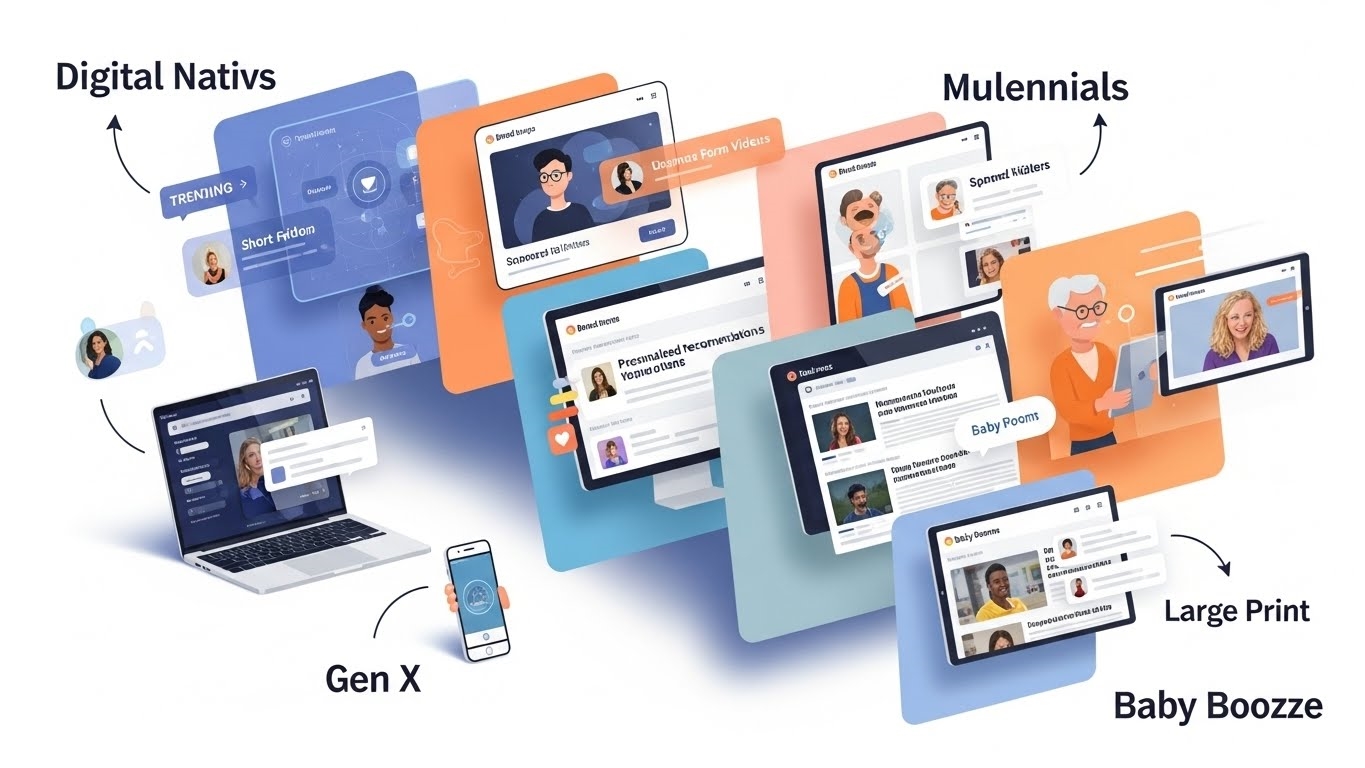
What if the key to unlocking unprecedented social engagement isn’t a new algorithm, but a deeper understanding of who you’re talking to? In 2026, the noise on social platforms demands more than just presence; it requires precision. This is where the meticulous study of social media demographics transforms from an analytical exercise into your most potent strategic weapon.
Crafting Resonance Through Data
Demographics aren’t merely statistics; they are the bedrock upon which truly effective social strategies are built. Consider them the architectural plans for your audience engagement. Without this foundational insight, you’re essentially building in the dark. Understanding age, gender, location, income, and even psychographics allows us to construct vibrant buyer personas – not abstract ideals, but detailed representations of your actual and prospective customers. This clarity directly informs your ad mix optimization, ensuring every dollar spent on paid social targets the right eyes on the right platform, at the right time. Furthermore, it’s the secret sauce for engaging organic audiences, enabling content that doesn’t just broadcast, but genuinely connects.

Connecting with Purpose
Leveraging these demographic insights moves beyond simple targeting; it fuels effective content generation that resonates on a visceral level. Imagine tailoring a campaign for Gen Z, known for their skepticism towards AI-generated content, versus one for Baby Boomers, who might be discovering TikTok’s rapid growth. Each group demands a distinct voice, format, and value proposition. This granular understanding allows you to craft narratives, visuals, and calls-to-action that speak directly to their worldviews, fostering an authentic audience connection that transcends fleeting trends. It’s about moving from broad strokes to laser-focused communication, turning data points into genuine dialogue.
Global Social Media Shifts: Demographics Redefined
The currents of social media are perpetually in motion, and understanding their flow is paramount for any brand aiming for genuine connection. We’re not just talking about minor ripples; we’re witnessing seismic shifts in who uses these platforms, how they engage, and what they expect. These aren’t abstract figures; they are the very fabric of audience behavior, dictating everything from content strategy to platform investment.

The critical role of demographics in social strategy cannot be overstated, as it directly informs the building of buyer personas, optimizing ad mix, and engaging organic audiences. Leveraging demographic insights for effective content generation and audience connection is no longer optional; it is the bedrock of successful digital outreach.
Age Distribution Shifts
One of the most striking transformations is the steady increase in the average age of social media users. Platforms once dominated by younger demographics now see a significant presence of older generations, bringing new perspectives and consumption habits. Simultaneously, a new cohort is making its entrance: Gen Alpha, born from 2010 onwards. The oldest members of this generation are now 16, beginning to shape their digital identities and preferences. This dual movement means marketers must cater to both a maturing audience seeking different forms of value and a nascent generation whose digital fluency is innate.

Global Reach and Engagement
The sheer scale of social media engagement is staggering. Globally, 5.17 billion individuals are active on these platforms, dedicating an average of 2 hours and 20 minutes daily to scrolling, sharing, and connecting. This immense daily investment underscores the platforms’ integral role in daily life. When we look at sheer user volume, three nations consistently lead the pack, representing colossal markets with distinct cultural nuances: China, India, and the USA.
Regional Dynamics
While global numbers paint a broad picture, regional specifics reveal critical growth opportunities and saturation points. Northern Europe, for instance, boasts the highest social media penetration worldwide. This indicates a mature market where nearly everyone is connected, demanding sophisticated, nuanced engagement strategies. Conversely, regions like Nigeria are experiencing some of the fastest growth in social media user bases. For brands, this signifies burgeoning markets ripe for initial engagement and brand building, often with a mobile-first approach and a strong emphasis on community.

Gen Z’s Digital Ethos
Perhaps no generation challenges conventional digital marketing wisdom quite like Gen Z. Their relationship with content, particularly AI-generated material, is marked by a profound skepticism. Only 21% of Gen Z users report trusting AI-generated content, and a mere 20% actively engage with it. This signals a clear preference for authenticity and human-created narratives. Furthermore, Gen Z increasingly leverages social networks not just for entertainment, but as primary tools for information search. They bypass traditional search engines, turning to platforms like TikTok and Instagram for product reviews, news, and how-to guides. For marketers, this means prioritizing genuine, relatable content and understanding that social platforms are now discovery engines, not just broadcasting channels.
These global trends and generational shifts are not merely statistics; they are directives. They compel us to rethink our assumptions, refine our targeting, and ultimately, build more meaningful connections in a dynamic digital ecosystem.

Decoding Social Audiences: A Platform-Specific Deep Dive
Understanding the unique composition of each major social platform is not merely an academic exercise; it’s the bedrock of any effective audience engagement strategy. As we navigate 2026, the nuances of who uses what, how, and where, dictate everything from content format to ad spend. Let’s pull back the curtain on the distinct demographic profiles shaping the top social arenas.
Facebook’s Enduring Reach
With a staggering user base exceeding 3 billion individuals, Facebook remains a colossal force. While often perceived as an older platform, its demographic spread is remarkably broad. A significant 25.7% of its audience is aged 45 and above, demonstrating its continued relevance across generations. In the United States, this trend is even more pronounced, with 75% of Americans aged 30-49 actively engaging. Globally, the platform skews slightly male at 56.7%, though in the U.S., women represent a dominant 76% of its American user base. India and the USA consistently stand as its top geographic markets, underscoring its global and regional significance.

Instagram’s Visual Dominance
Instagram, boasting over 2 billion users, thrives on visual storytelling and a decidedly younger audience. A substantial 67.8% of its global users are under 35, with an even sharper focus in the U.S. where 78% of Americans aged 18-29 are active. The gender split is nearly even globally, with 50.6% male, but American women hold a slight edge at 54%. Like its Meta counterpart, India and the USA are its primary geographic strongholds, making it a critical channel for brands targeting visually-driven younger demographics in these regions.
X’s Evolving Discourse
X, formerly known as Twitter, commands a user base of 611 million. Its audience leans young, with 73.2% of global users under 35, and 42% of Americans aged 18-29. The platform’s gender distribution is predominantly male at 60.9%. A notable trend, however, is the decline in U.S. population usage since 2023, signaling a shift in its domestic influence and potentially its role in public discourse. Marketers must weigh this against its still-significant global reach and real-time information flow.

LinkedIn’s Professional Network
LinkedIn stands apart as the premier professional networking platform, connecting over 1 billion members. Its core utility revolves around job searching and company listings, attracting a distinct demographic. The sweet spot for age is clearly defined, with 50.6% of its users aged 25-34. Globally, men comprise 56.4% of its membership. The USA and India are its largest markets, reflecting the global nature of professional networking and talent acquisition.
TikTok’s Short-Form Phenomenon
TikTok’s meteoric rise continues, now with 1.58 billion users globally. Its addictive short-form video content drives impressive engagement, with U.S. users spending an average of 55 minutes daily. While 62% of Americans aged 18-29 are on the platform, a fascinating development is its fastest growth occurring among Baby Boomers, indicating a broadening appeal beyond its Gen Z roots. American women account for 40% of its U.S. audience. Indonesia and the USA lead its geographic markets, highlighting its immense cultural impact.

YouTube’s Video Empire
YouTube remains the undisputed king of video content, serving 2.504 billion users. Its average daily usage of 50 minutes underscores its deep integration into daily routines, with over 1 billion hours of content consumed on TVs alone. Its reach among younger audiences is near-universal: 93% of Americans aged 18-29 and 93% of U.S. teenagers are active. Globally, 54.3% of its users are male. India and the USA are its top geographic markets, solidifying its position as a global entertainment and information hub.
Pinterest’s Discovery Engine
Pinterest, with 518 million users, distinguishes itself as a visual discovery engine. Its growth is particularly strong in the “Rest of World” regions, which are its fastest-growing segment. The platform is overwhelmingly female-dominated, with 69.4% of its global users identifying as women. Gen Z represents both its largest and fastest-growing audience, demonstrating significant engagement; this demographic saves 2.5 times more Pins than other age groups, making it a powerful platform for visual inspiration and product discovery.

Snapchat’s Ephemeral Connections
Snapchat connects over 800 million users, with 422 million daily active users. Its strength lies in reaching younger audiences, with an impressive 75% of 13-34 year olds in the U.S. utilizing the platform. Globally, the gender split is even at 50% male, though American women constitute 32% of its U.S. audience. India and the USA are its leading geographic markets, underscoring its continued relevance for brands aiming to connect with youth culture through ephemeral content.
FAQ
How do privacy laws impact demographic data?
Regulations like GDPR restrict data collection and usage. Consent and protection are paramount.
What challenges hinder accurate demographic data collection?
Self-reported inaccuracies, outdated third-party sources, and cross-platform reconciliation pose difficulties.
How do psychographics enhance demographic understanding?
Psychographics reveal user interests, values, and lifestyles. This combination refines targeting.
Are niche platforms important for specific demographics?
Yes, specialized platforms attract highly engaged, targeted segments. They offer focused outreach.